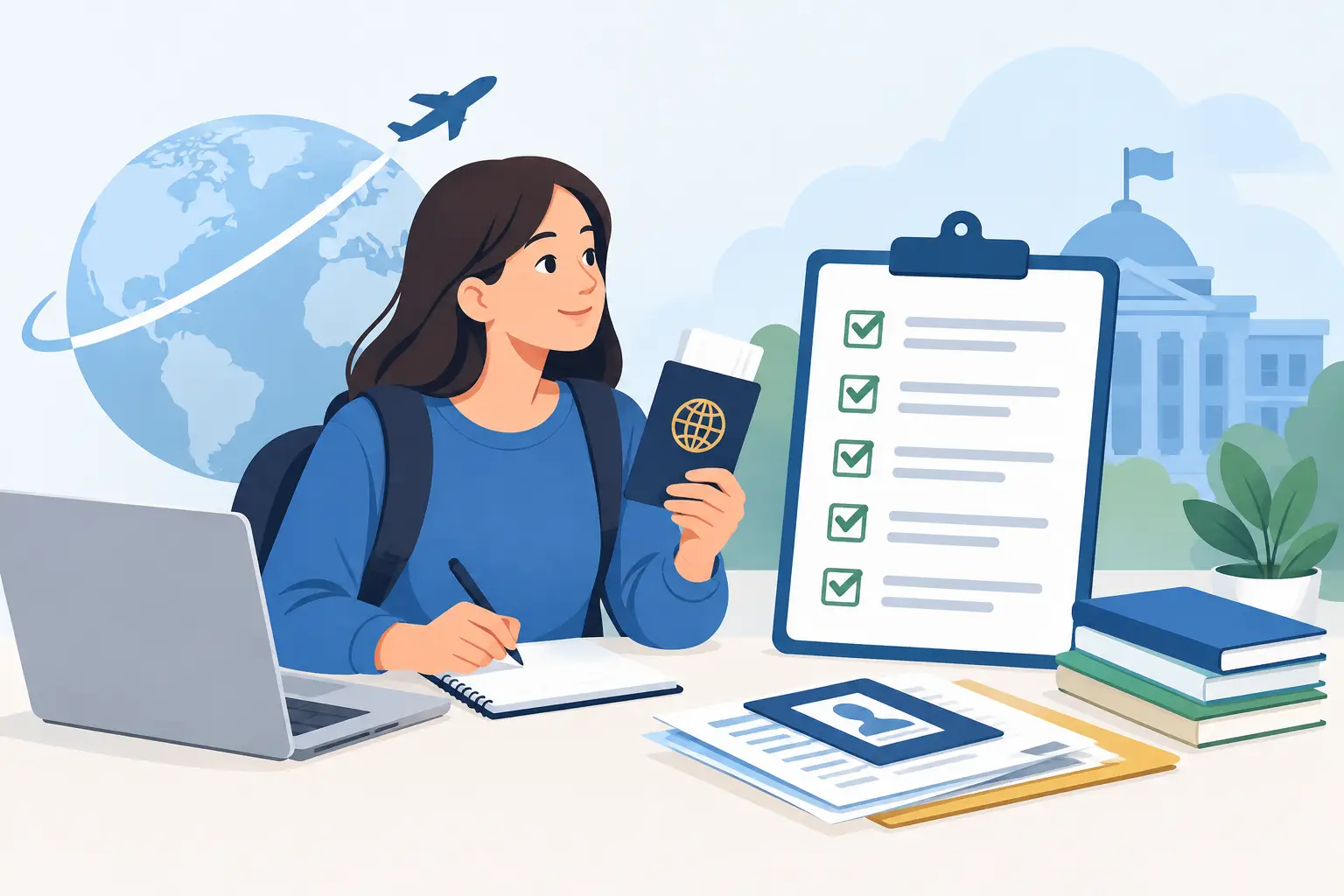
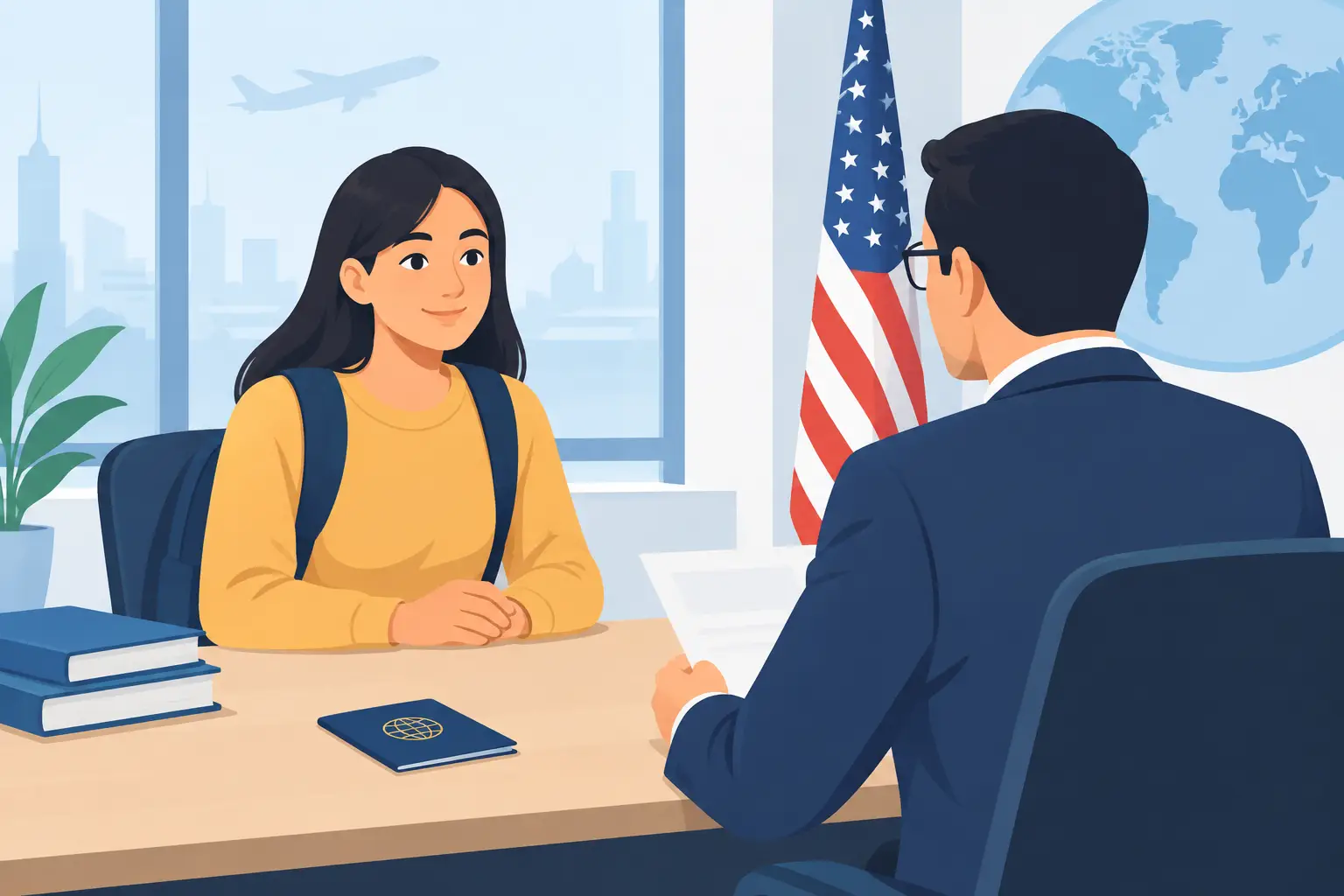
A student visa interview can be brief, but the decision behind it carries real weight. The officer is not asking you to perform a polished speech. They are assessing whether your plans are credible, your documents support your answers, and you understand what studying in their country requires. Preparing for student visa interviews means organizing your facts well enough to explain them calmly and truthfully.
For students and families, the pressure often comes from uncertainty: Which questions matter? How much detail is too much? What if an answer is imperfect? A clear plan, current documentation, and realistic expectations can replace last-minute memorization with informed preparation.
Understand What the Interview Is Designed to Confirm
Interview procedures differ by destination and visa category, so always follow the instructions issued by the relevant embassy, consulate, or visa authority. Still, most student visa interviews focus on a similar set of questions: why you chose the program, how you will pay for it, whether you are academically prepared, and whether your planned stay matches the visa rules.
The officer may have only a few minutes to review your case. Your job is to make the connection between your admission, academic history, financial evidence, and future plans easy to see. Treat the interview as a verification conversation, not an admissions interview. You have already been accepted by a school. Now you need to show that your purpose and supporting evidence are consistent.
A strong answer is usually direct. If you are asked why you chose a particular university, begin with the program, specialization, course structure, research opportunity, or career relevance. Avoid broad claims such as “It is the best school in the world” unless you can explain specifically why it is the right fit for you.
Build One Clear Study Story
Before practicing questions, write your education plan in plain language. It should cover what you will study, why that subject makes sense given your background, why you selected that institution and destination, and what you intend to do after completing the program.
This is not a script to recite word for word. It is a fact-based outline that keeps your answers consistent. For example, a student moving from a bachelor’s degree in civil engineering to a master’s degree in sustainable infrastructure can explain the academic progression and identify relevant career opportunities at home. A student changing fields can also be credible, but should explain the bridge: prior work experience, prerequisite courses, a defined professional goal, or a new specialization that builds on existing knowledge.
Explain the school choice with evidence
Be ready to discuss your specific program, not just the country. Know the program name, length, start date, curriculum focus, tuition, and campus location. If your school offered a scholarship, understand the amount, conditions, and what costs remain.
Parents and sponsors can help here by reviewing the plan with the student. The goal is not to provide the answers for them. It is to ensure everyone understands the same financial and academic facts. Inconsistent explanations from a student and sponsor can create avoidable confusion.
Connect study to a realistic future plan
Many visa systems require applicants to demonstrate that they intend to follow the conditions of temporary student status. Your future plan should therefore be concrete and honest. Describe how the qualification supports your professional path, family responsibilities, career prospects, or long-term goals in your home country or another location where you are legally entitled to live and work.
Do not invent commitments or exaggerate job offers. Officers are trained to recognize vague or rehearsed claims. Evidence is more persuasive when it is genuine, such as a career path in a family business, an established employer relationship, professional licensing goals, or demand for your planned specialization in your home market.
Organize Documents Before You Practice Answers
A well-organized file will not replace a credible interview, but it allows you to respond efficiently when an officer requests proof. Requirements vary widely, and the official checklist for your visa category should always control. In general, organize original documents and copies in the order you may need them: passport and application confirmation, admission or enrollment documentation, academic records, test results if required, financial evidence, scholarship information, and sponsor records.
Financial evidence deserves particular attention. You should be able to explain who is paying, how funds were accumulated, what your annual educational and living costs are, and whether the available resources cover those costs. If a parent, relative, employer, or other sponsor is supporting you, understand their relationship to you and the documents they are providing.
Large recent deposits are not automatically disqualifying, but they can prompt questions. If there is a legitimate explanation, such as the sale of an asset, a business payment, or a matured investment, bring records that show the source. Transparency matters more than producing a large number without context.
Use a simple folder or digital planning checklist to prevent errors, but bring materials in the format required by the embassy or consulate. Some locations limit what applicants may carry inside. Verify these rules shortly before your appointment because procedures can change.
Practice for Student Visa Interviews Without Sounding Rehearsed
Practice is useful when it improves clarity, not when it turns your interview into a performance. Ask a parent, teacher, counselor, or education agent to pose questions in a neutral, direct way. Answer in your own words, then check that your explanation matches your application and documents.
Common questions may include why you chose the course, why you chose that country, how you will fund your studies, what your sponsor does, and what you plan to do after graduation. You may also be asked about previous travel, family members abroad, academic gaps, prior visa applications, or a change in major.
Keep answers proportional to the question. A concise answer is often stronger than a long explanation that introduces unrelated details. If the officer wants more information, they will ask. At the same time, never answer with only “because I like it” when the question calls for a reasoned explanation.
If you do not understand a question, ask politely for it to be repeated or clarified. Guessing can create a contradiction. If you are nervous, pause for a moment, breathe, and answer carefully. Nervousness is common; dishonesty and inconsistency are the greater risks.
Address Complex Circumstances Directly
Not every applicant has a straightforward profile. A study gap, lower grades, a prior refusal, a program change, or a sponsor with an unusual income structure may require additional preparation. None of these automatically determines the outcome. What matters is whether your explanation is accurate, supported, and logically connected to your current plan.
For a study gap, explain what you did during that time, such as employment, family responsibilities, language preparation, or professional development. For a previous refusal, do not criticize the visa authority or conceal the result. Explain what has changed, if anything, and provide updated evidence where relevant.
Students working with an agent should still be able to explain every part of their own application. Agents can help compare programs, confirm requirements, and organize timelines, but the student remains responsible for the interview answers. A centralized platform such as WorldEd can make that preparation more efficient by keeping program details, application information, scholarships, and practical planning in one place. It cannot, and should not, replace the student’s firsthand understanding of their decision.
Prepare for the Day, Not Just the Questions
Confirm your appointment time, location, required fees, and transportation plan in advance. Arrive early enough to complete security procedures without rushing, but do not arrive so early that you create unnecessary stress. Wear clean, professional clothing that is appropriate for the local setting. Formal business attire is not always necessary; being neat and prepared is.
Review your key facts once the evening before: your program, school, funding source, course length, and post-study plan. Then stop cramming. A rested applicant is more likely to listen carefully and respond naturally than someone trying to memorize a page of model answers.
Your visa interview is one step in a larger education journey, alongside selecting the right program, securing admission, arranging funding, and planning housing and travel. Give it the same practical attention you gave the rest of your application: know your facts, bring truthful evidence, and let your real academic purpose come through.